
Kindly written for TFHB by Colin Whelan
“I was just as sure of Keegan as I was of Denis Law, and I never had cause to think again about Denis. These two players are so much alike in many ways.” – Bill Shankly, on his new signing at Liverpool.
It is easy to argue that Kevin Keegan never quite gets the recognition he deserves.
There are a few reasons for this. Firstly, he had to work so hard to get his break, and then to become the player that he became - his talent never seemed to be “God-given”. Secondly, his recognition as Europe’s best player, twice, occurred in a relatively weak era, post-Beckenbauer and Cruyff. And, thirdly, his successor at Liverpool has a claim to be an even better player than King Kev.
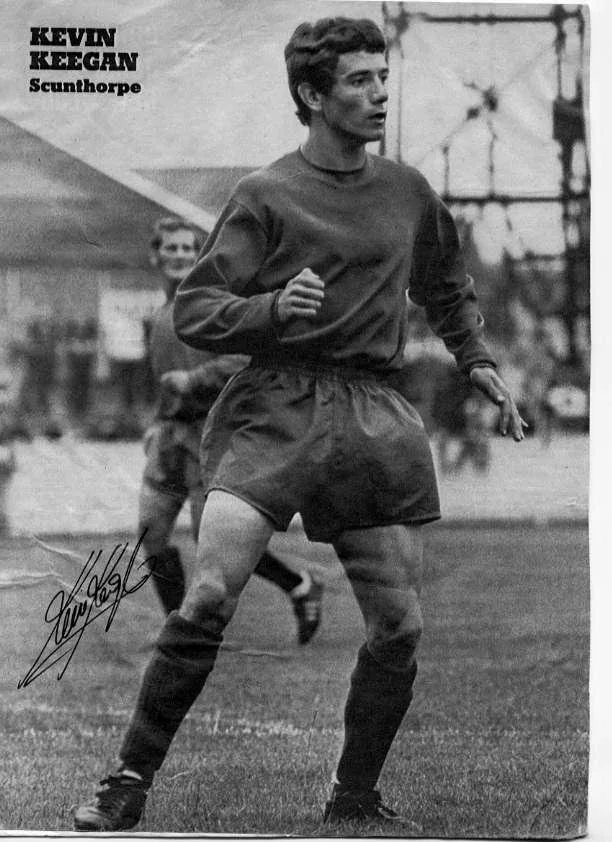
He did the hard yards, no one can argue with that, starting at Division 4 team Scunthorpe. A season and a bit after his ‘break’ - a transfer to Liverpool - he played for England, a testament to where the application of hard work and talent can lead to.
He stayed at Scunthorpe for three seasons, ending with a pretty meagre return of 18 goals in 124 games. But it was his ability to “drop a few hand grenades” that appealed to his next boss, Bill Shankly. The energy levels, the willingness to run directly at and through defenders with his staccato dribbling; his genuine pace over 10 yards; that colossal work ethic - this all made Keegan an irresistible talent.
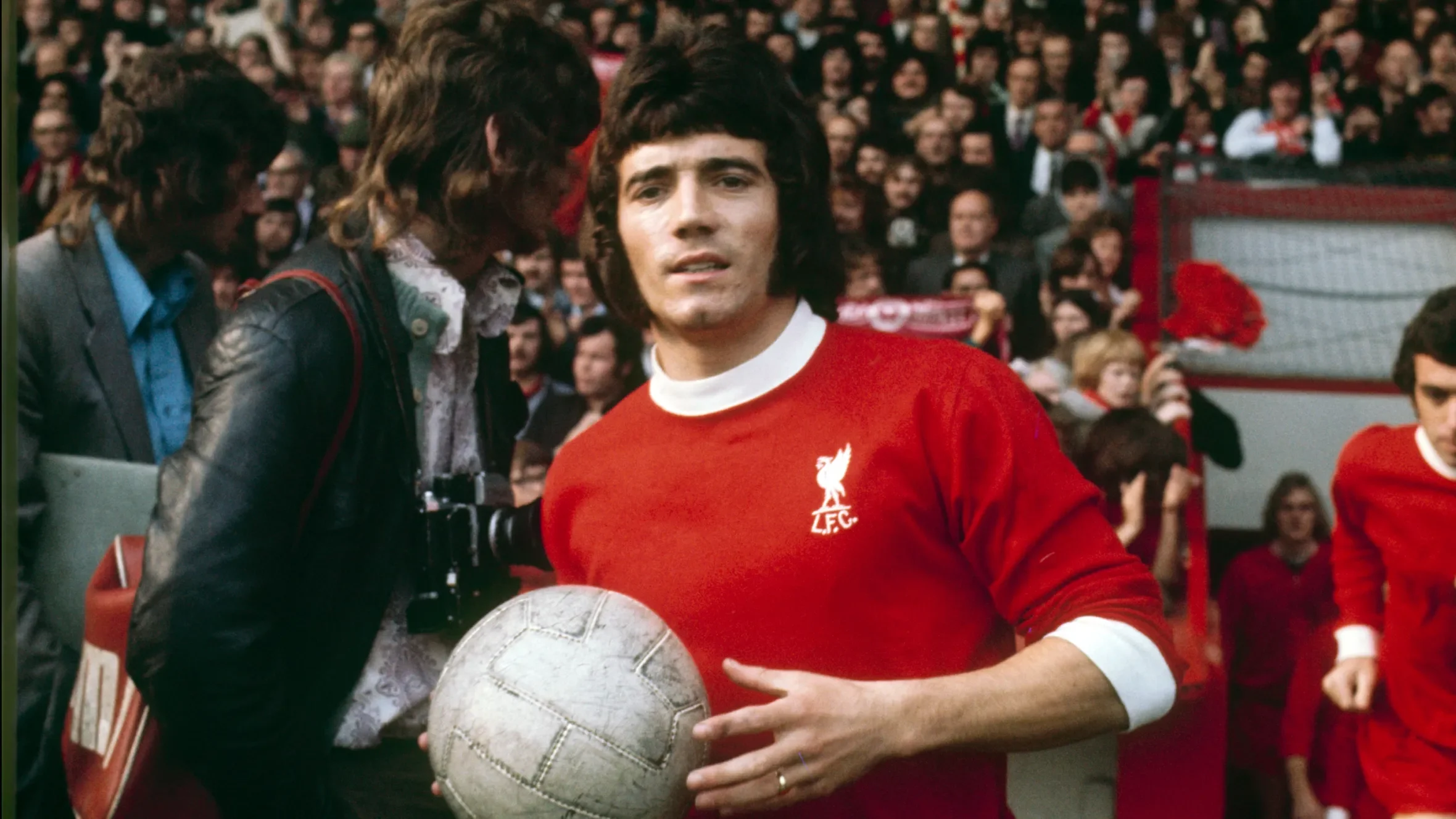
A five-season stay at Liverpool followed, where he proved himself as the best player in the football league. He made it his own mission to grab that chance, a chance he would easily have thought would pass him by, playing for a team that didn’t even challenge for promotion from Division 4. His game improved, to the extent that he and his new strike-partner, John Toshack, took on the best defences in Division 1, and, generally, had the better of them. A League Championship and UEFA Cup were just rewards for their 1972-73 campaign, but it was a three-month period the following year, when the country became increasingly aware of this exciting young talent.
And it is no exaggeration to suggest that Kevin Keegan stole the headlines in many of the newspapers, front and back, for a lengthy period between May and August 1974.
It all started with the Cup Final, and Liverpool’s 90-minute dissection of Joe Harvey’s humble Newcastle team, led upfront by an immodest braggart. The wayward predictions of ‘Supermouth’ Malcolm Macdonald were soon forgotten, as Wembley, and the nation, were treated to an almost solo performance from Kevin Keegan. He totally ran the show that afternoon, scoring two goals, as Liverpool won 3-0. He was at his bustling, busy best, demanding the ball, orchestrating the play. He fitted that Liverpool team so well that day, and you understood exactly why Shankly loved him so much.
The very next month, we saw Kevin almost beaten to a pulp, by over-officious Yugoslav police at Belgrade Airport! It was all a case of very-badly mistaken identity, with the England players arriving in Belgrade an hour early, and not wearing their more formal ‘England’ attire. The police were also alerted to some mild misbehaviour from the touring party. FA officials did manage to persuade the police to release Keegan, but not before he had been hauled into a private room for his very own private beating.
Two days later, an unbelievably focussed Keegan grabbed a 75th minute an equaliser in a 2-2 draw.
And in this now familiar ‘mistaken identity’ caper, Keegan managed to clump Billy Bremner, as the pair of them were sent off in the 1974 Charity Shield, played in August. Apparently, Keegan thought he was punching Johnny Giles, the sneaky git who had punched him from behind a few moments earlier. Both left the field, throwing their shirts to the ground, as they railed against the ‘injustice’ of their dismissals.
In the days when the FA threw the book at those who committed misdemeanours on the pitch, Bremner’s book caught him flush, as he was banned for eight games; Keegan’s book caught him slightly more than a glancing blow, as he was banned for three games. Both were fined £500.
The country was now perfectly aware of Kevin Keegan’s identity.
King Kev finished his majestic spell at Liverpool, winning all the major honours, except the League Cup, signing off with a magnificent display in the European Cup Final, running the best defender in the world, Berti Vogts, ragged. Liverpool won the trophy for the first time in 1977, beating Borussia Monchengladbach 3-1.
But Keegan also knew what he was worth. He knew that the offer of £250k per year at Hamburg would butter more parsnips than the £12.5k per year on offer at Liverpool. And he also had a mission to prove that not every English football export would prove to be a flop. However, those motivations were easily dismissed by the press in 1977, casting Keegan in the role of a greedy villain, gloating triumphantly as Keegan’s new team were humiliated 6-0 at Anfield in the European Super Cup.
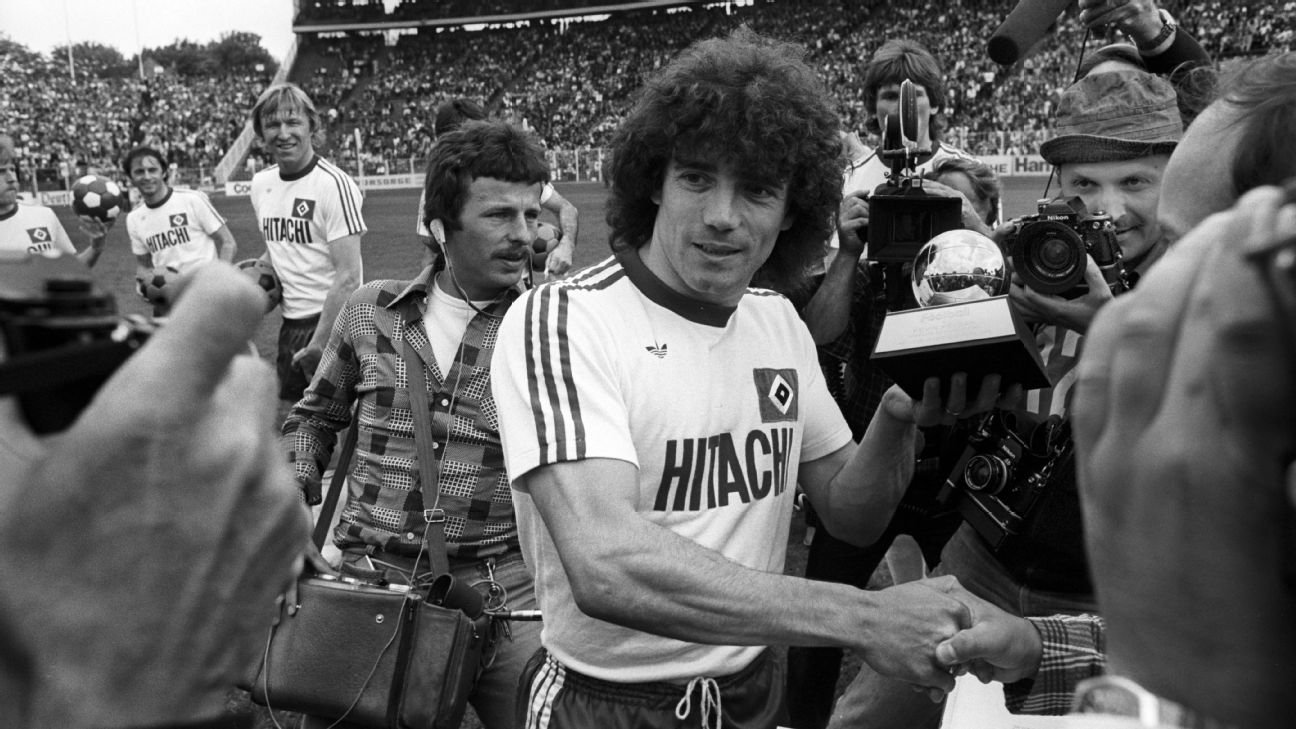
He stayed three seasons at Hamburg, genuinely struggling to adapt at first; but the arrival of the Zebec-Netzer managerial partnership changed all that in the 1978-79 season, as they won their first-ever Bundesliga. Keegan finished the season as their top-scorer, with 17 goals.
It was at this time, that English fans were denied a proper look at England football’s best player. We certainly noted that he looked a better player every time he played for England, but we weren’t watching him week in, week out. We were just reading the reports: Kevin Keegan was dominating German football!
And this, too is a crucial part of why we slightly underestimate him: we didn’t actually see Kevin Keegan play at his peak. Whilst his fantastic replacement at Liverpool was uprooting trees in the First Division, we didn’t see what Keegan was doing at his professional peak, in Germany. He won two Ballon d’Ors playing for Hamburg, not Liverpool. He played his best football at Hamburg. Kenny Dalglish came second at the Ballon d’Ors, once in 1983.
Eventually Keegan came back to light up English football in 1980. Firstly, part of Southampton’s best-ever team, scoring a goal every other game; and then dragging Newcastle back to the First Division, before retiring from football entirely in 1984.
His international career suffered because England were very unlucky twice in World Cup qualification. His one big tournament, Euro ‘80, was deemed a failure, after England lost to the host nation and drew with the eventual finalists. An injured back all but ruled him out of the only World Cup he could play in, two years later. But let that not detract from his overall career.
Kevin Keegan was a giant of English football, a colossus of a player at every single team he played. Machtig Maus is still English football's greatest ever football export.
